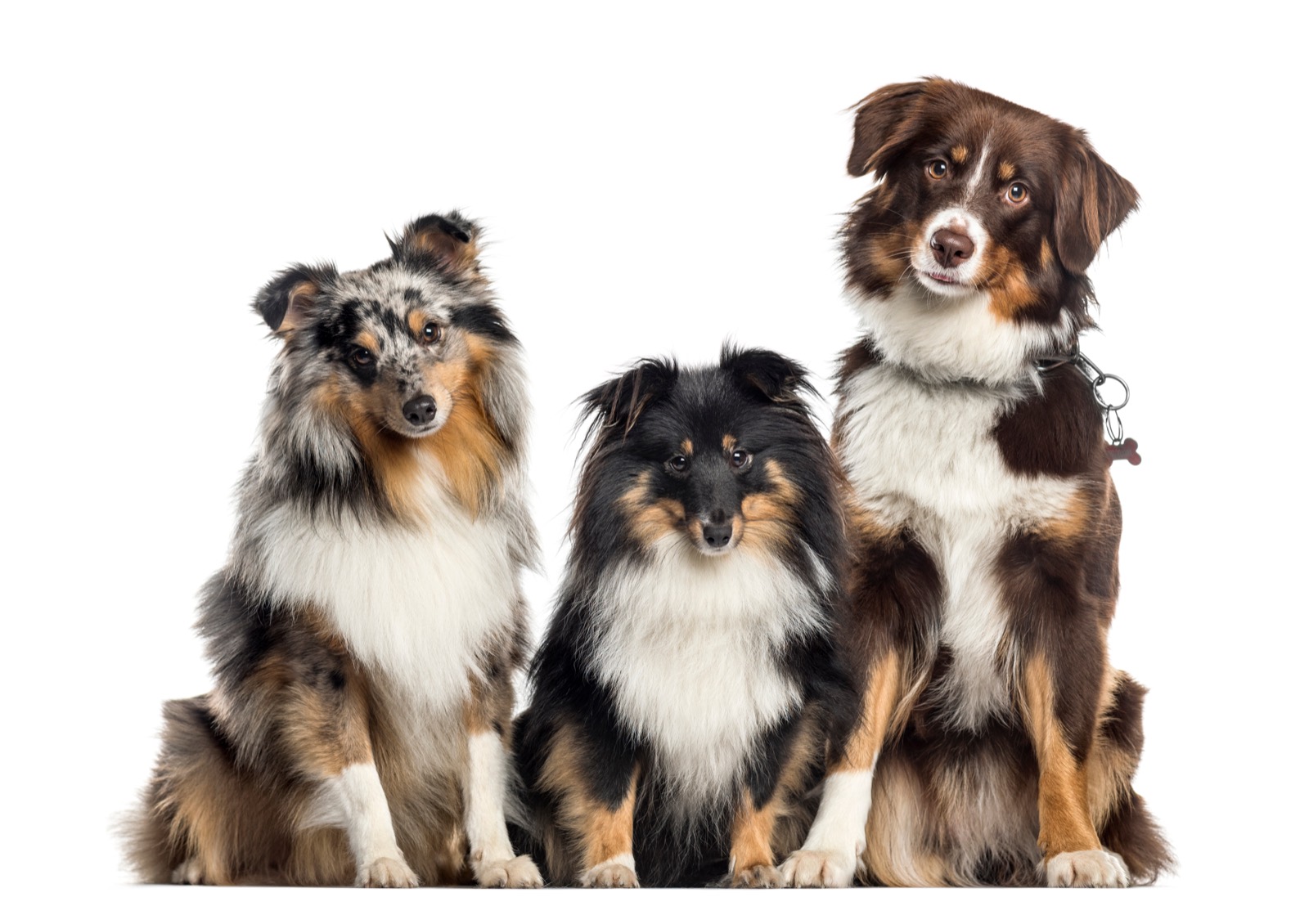
You may have chosen your dog for the look, the size, or because a neighbor had one and it seemed so calm. Months later the same dog is digging trenches, herding the kids at dawn, or barking through the night, and you find yourself wondering what changed. Often, nothing changed. The dog is simply doing the work its ancestors were bred to do, in a home that was never set up for it.
Mismatches between a family's expectations and a breed's underlying tendencies are a common and largely preventable source of frustration, and sometimes of rehoming. These are rarely bad dogs or bad families. They are usually well meaning people who were never told what a particular type of dog was selected to do over many generations.
Most Breeds Were Shaped Around a Job
According to the American Kennel Club, there are currently 205 recognized breeds, organized into seven groups: Sporting, Hound, Working, Terrier, Toy, Non-Sporting, and Herding. Many of those group names are simply old job descriptions. Herding dogs were bred to move livestock, sporting dogs to find and retrieve game birds, hounds to track or chase, and working dogs to pull, haul, and guard.
It is important to be honest about how much breed actually predicts. In a large 2022 study published in the journal Science, Morrill and colleagues analyzed more than 2,000 dog genomes alongside roughly 18,000 owner surveys and found that breed explained only about 9 percent of the variation in an individual dog's behavior. As the Broad Institute, which led the work, summarized it, breed is a poor predictor of how any single dog will behave, and physical traits such as coat color were far more strongly tied to breed than behavior was.
What the research supports is a more modest and more useful idea. Some heritable tendencies, the study found, do cluster by breed at the population level, even if individual dogs vary widely. A breed does not guarantee a behavior. It shifts the odds. A herding background makes a strong chase and gather instinct more likely, not certain, and that is exactly why so many families are caught off guard.
What That Looks Like at Home
The herding instinct that helped a dog move sheep can reappear in a living room as circling, nipping at heels, or fixating on running children and bicycles. The drive that let a sled or working dog cover ground for hours does not disappear in a small apartment. Instead, an under exercised dog with that kind of energy often redirects it into chewing, digging, or barking, behaviors people read as misbehavior rather than unmet need.
None of this means a high drive dog cannot thrive in a home. It means the home has to provide an outlet, through daily exercise, training, and mental work, that stands in for the original job.
How Mismatches Reach Shelters
The scale of dogs moving through shelters is significant. The ASPCA reports that roughly 5.8 million dogs and cats entered U.S. shelters and rescues in 2024, split fairly evenly between the two species. Most arrived as strays, about 60 percent in 2024, while around 29 percent were surrendered by owners who could no longer care for them.
The ASPCA frames many of those surrenders as the result of unforeseen barriers in the owner's life rather than a failure of the dog. Housing changes, finances, and shifts in a family's ability to provide care all play a role. Behavior contributes too, and a meaningful share of behavior driven surrenders trace back to ordinary breed tendencies that the household was simply not prepared to manage.
The Traits That Surprise People Most
A few working backgrounds catch new owners off guard more than others.
- Livestock guardian breeds such as the Great Pyrenees were bred, in the words of the AKC, to be independent thinkers that guard flocks without human supervision or direction. The AKC also notes that the Great Pyrenees is naturally nocturnal and that owners should not be surprised to find these dogs barking at night, because that is precisely the work they were developed for.
- Scent hounds like the Beagle were, as the AKC describes, bred to hunt in packs and to follow their noses. A dog's sense of smell is extraordinary. PBS NOVA reports that dogs carry up to 300 million olfactory receptors, compared to roughly 6 million in people, and can smell on the order of 10,000 to 100,000 times better than we do. Trainers note that a strong scent can override even a well practiced recall, which is why off leash reliability in an open area is something to plan around rather than assume.
- Terriers and other high prey drive dogs were often developed to chase and dispatch small animals. That history can show up as intense interest in cats, rabbits, or other small pets, and is worth discussing honestly before bringing such a dog into a multi pet home.
Making a Match That Works
A better starting question than "what breed do I like?" is "what does this type of dog tend to need, and can I honestly provide it?" Because individual dogs vary so much, the answer also depends on the specific animal in front of you, not just its label.
A responsible breeder or rescue will talk openly about a dog's energy, drive, and quirks, and will sometimes tell you that a particular dog or breed is not the right fit for your situation. That willingness to turn away a poor match is one of the clearest signs that the people involved are putting the dog first.
When you research a breeder, rescue, or shelter, look beyond the photos. Look for honest temperament notes, exercise and training expectations, and a frank description of what living with the dog is actually like. The information that prevents a mismatch is usually available, if someone took the time to write it down.
Don't Guess. Check.
Before you send money, before you fall in love, before you bring a dog home, check the record. Search breeders, rescues, and shelters.
Check the RecordSources
- American Kennel Club. (n.d.). AKC breeds by group. Retrieved June 9, 2026, from https://www.akc.org/akc-breeds-by-group/
- Broad Institute. (2022, April 28). Dog genetics suggest that behavior is more than just breed. https://www.broadinstitute.org/news/dog-genetics-suggest-behavior-more-just-breed
- American Society for the Prevention of Cruelty to Animals. (n.d.). U.S. animal shelter statistics. Retrieved June 9, 2026, from https://www.aspca.org/helping-shelters-people-pets/us-animal-shelter-statistics
- American Kennel Club. (n.d.). Get to know the livestock guardian dog breeds. Retrieved June 9, 2026, from https://www.akc.org/expert-advice/dog-breeds/get-to-know-the-livestock-guardian-dog-breeds/
- American Kennel Club. (n.d.). Fun facts about the Great Pyrenees. Retrieved June 9, 2026, from https://www.akc.org/expert-advice/lifestyle/fun-facts-great-pyrenees/
- American Kennel Club. (n.d.). Beagle. Retrieved June 9, 2026, from https://www.akc.org/dog-breeds/beagle/
- PBS NOVA. (2012, October 4). Dogs' dazzling sense of smell. https://www.pbs.org/wgbh/nova/article/dogs-sense-of-smell/
