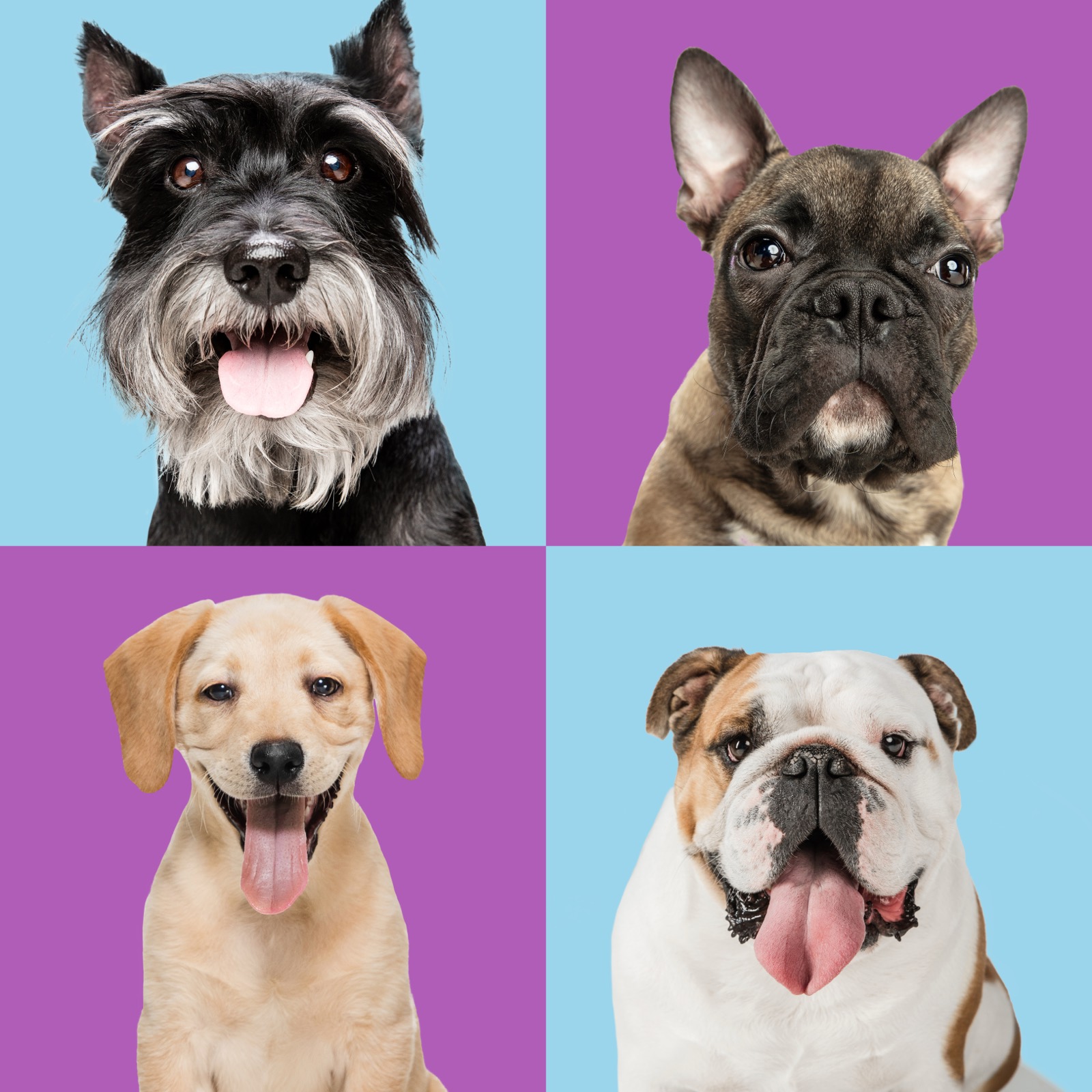
The term "service dog" covers an extraordinary range of disciplines, each requiring specialized training, specific temperament traits, and the right dog for the job. What most people don't realize is that the right dog can come from almost anywhere. Program bred Labradors and shelter rescues have both produced exceptional service animals. What matters is the individual dog, the training, and the fit with the handler's needs.
Guide Dogs
Guide dogs navigate physical obstacles, stop at curbs and staircase edges, and exercise "intelligent disobedience", the trained ability to refuse a handler's command when following it would create danger. A guide dog that stops at a curb when the handler says "forward" because a car is running a red light is not disobeying, it is doing exactly what it was trained to do.
Traditional guide dog programs have historically relied on purpose bred Labrador Retrievers, Golden Retrievers, and German Shepherd Dogs from carefully selected lines, a reflection of decades of temperament and health data. Leading schools such as Guide Dogs for the Blind breed primarily Labradors, Golden Retrievers, and Lab and Golden crosses, and major guide dog organizations provide their dogs to recipients at no cost, funded by donations. Placement follows a process that can take many months, and a dog moves from puppyhood through advanced training over roughly two years before placement.
Owner trained guide dogs, handlers who obtain and train their own dogs with professional support, are a growing pathway, particularly outside the US where major guide dog organizations are fewer. Temperament, trainability, and health soundness matter in every case regardless of origin.
Hearing Dogs
Hearing dogs alert deaf or hard of hearing handlers to specific sounds: doorbells, fire alarms, smoke detectors, phones, crying babies, alarm clocks, and approaching vehicles. When the dog hears a target sound, it makes physical contact with the handler and leads them toward or away from the source.
Hearing dog programs have long drawn from shelter populations. Mixed breeds, Cocker Spaniels, Miniature Poodles, and smaller terrier type dogs often demonstrate the environmental awareness and handler attunement that hearing work requires. Size is not a reliable predictor, small and medium dogs are fully capable in this discipline.
Mobility Assistance Dogs
Mobility assistance dogs open doors, retrieve dropped items, press elevator buttons, pull wheelchairs on command, and provide bracing support for handlers with balance conditions. The physical requirements of this work, particularly bracing and pulling, mean the dog must be large enough to provide meaningful assistance without risking its own joints.
Labrador Retrievers, Golden Retrievers, and Standard Poodles are the most common breeds in this discipline because their size, temperament, and trainability profile fit the requirements well. Some programs also work with Bernese Mountain Dogs and other large breeds. Health documentation matters particularly here, a mobility assistance dog that develops hip dysplasia at age 5 has a shortened working life, which affects both the handler and the significant training investment.
Medical Alert Dogs
Medical alert dogs detect physiological changes in their handlers, dropping blood glucose in diabetic alert dogs, impending seizures in seizure alert dogs, or allergen presence in anaphylaxis alert dogs. The detection mechanism is understood to be scent based: the body produces chemical changes during these events, and peer reviewed research has shown that dogs can be trained to alert to the scent signature of hypoglycemia samples from people with type 1 diabetes, in some cases before the handler is consciously aware anything is happening.
This discipline sees significant variation in breed and origin. Some programs breed specifically for scent sensitivity and handler focus. Others identify candidates from shelter populations, reasoning that dogs with heightened environmental sensitivity, sometimes the same trait that made them difficult to place as pets, are well suited for alert work. Both approaches have produced documented, life changing working dogs. The individual dog's sensitivity, focus, and ability to reliably communicate an alert are the relevant factors.
Psychiatric Service Dogs
Psychiatric service dogs (PSDs) are trained to perform specific tasks for handlers with diagnosed psychiatric disabilities: PTSD, major depressive disorder, anxiety disorders, bipolar disorder, and autism spectrum conditions. The key legal distinction is "specific tasks", a PSD performs trained, discrete behaviors that mitigate the handler's disability, which is different from providing general comfort through companionship.
Common PSD tasks include deep pressure therapy (applying weight to the handler during a panic attack or flashback), nightmare interruption (waking a handler during night terrors), perimeter checks (searching a room before the handler enters), crowd buffering (positioning between the handler and approaching people), and grounding behaviors during dissociative episodes.
This category has grown alongside increased recognition of psychiatric disability under the ADA. Owner trained PSDs are common in this category, many handlers work with professional trainers to train their own dog, including dogs obtained from shelters or rescues. Per the ADA, service animals do not have to be professionally trained or certified, and handlers have the right to train the dog themselves, the only requirement is that the dog is individually trained to perform specific tasks tied to the disability. Mixed breeds and rescue dogs perform this work successfully across the country every day.
Search and Rescue Dogs
SAR dogs locate missing persons, alive in wilderness scenarios, trapped under debris after disasters, or via cadaver detection. The work divides into air scenting (detecting human scent carried on air currents), trailing (following a specific person's scent), and area searches. Teams are typically volunteer based, with handlers and dogs trained and certified through organizations like NASAR (National Association for Search and Rescue).
SAR dogs come from an enormous range of backgrounds. German Shepherd Dogs, Belgian Malinois, and Labrador Retrievers are common, but mixed breeds with strong scent drive and endurance have performed the work successfully. The dog's physical fitness, environmental confidence, and drive to find are the selection criteria. Pedigree is secondary to capability.
The Legal Framework: Service, Therapy, and Emotional Support
Understanding the distinctions matters for handlers and for businesses, landlords, and institutions trying to understand their obligations.
A service dog is defined by the ADA as a dog individually trained to do work or perform tasks for a person with a disability. Service dogs have full public access rights, they may accompany their handlers in all areas open to the public. Per ADA.gov guidance, businesses may ask only two questions: Is this a service animal required because of a disability? What work or task has the dog been trained to perform? They may not ask about the nature of the disability or require documentation, certification, or a demonstration.
A therapy dog is trained to provide comfort to others, hospital patients, school children, disaster victims, nursing home residents. Therapy dogs work by invitation and arrangement with facilities. They have no independent public access rights and are not service animals under the ADA. Registration or certification through organizations like Pet Partners, Therapy Dogs International, or the Alliance of Therapy Dogs reflects training and behavioral standards, not a legal status.
An emotional support animal (ESA) provides comfort through companionship. No specialized task training is required. ESAs have historically had limited housing protections under the Fair Housing Act, which HUD has applied to assistance animals that provide emotional support, though they do not have public access rights and are not service animals under the ADA. The proliferation of fraudulent ESA certification letters sold online has created confusion and, in some cases, real harm to legitimate service dog handlers who face skepticism as a result.
The difference matters. Not because one category of dog is more deserving, all three serve real human needs, but because conflating them creates legal confusion and erodes the access rights that working service dog handlers depend on.
Check the Record
Search our directory of breeders, rescues, and shelters. Every profile shows available documents, health records, community reviews, and trust indicators, from purebreds to mixed breeds, breeders to rehomers.
Search All DogsSources
Americans with Disabilities Act. (2010). ADA requirements: Service animals. U.S. Department of Justice, Civil Rights Division. https://www.ada.gov/resources/service-animals-2010-requirements/
Americans with Disabilities Act. (n.d.). Frequently asked questions about service animals and the ADA. U.S. Department of Justice, Civil Rights Division. https://www.ada.gov/resources/service-animals-faqs/
U.S. Department of Housing and Urban Development. (n.d.). Assistance animals. https://www.hud.gov/program_offices/fair_housing_equal_opp/assistance_animals
Guide Dogs for the Blind. (n.d.). Frequently asked questions. https://www.guidedogs.com/resources/faqs
Hardin, D. S., Anderson, W., & Cattet, J. (2015). Dogs can be successfully trained to alert to hypoglycemia samples from patients with type 1 diabetes. Diabetes Therapy, 6(4), 509 to 517. https://pmc.ncbi.nlm.nih.gov/articles/PMC4674474/
National Association for Search and Rescue. (n.d.). Canine SAR certification. https://nasar.org/page/K9SAR
Pet Partners. (n.d.). Therapy animal program. https://petpartners.org/
