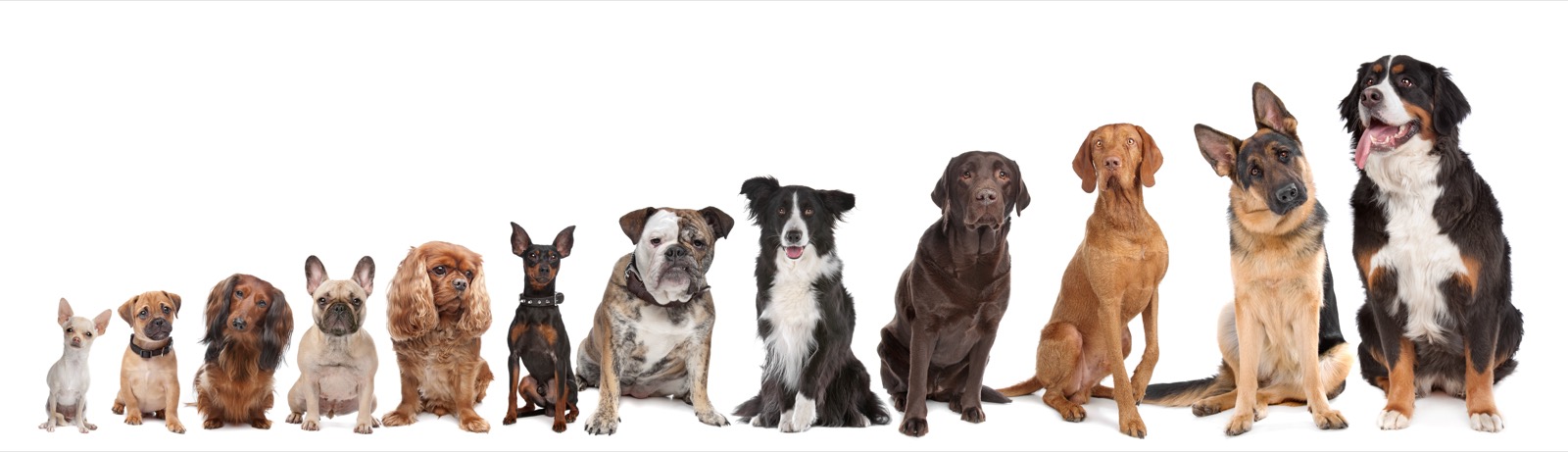
The puppy in the photo may not exist. The website may have been built last week. And right now, somewhere, a family is about to wire money to someone they have never spoken to, because the listing looked exactly like every other listing they trusted. The good news is that the warning signs are consistent, and most of them can be checked in a few minutes.
Puppy scams are a documented, ongoing form of online fraud. The Better Business Bureau, which has tracked these cases for years through its Scam Tracker, reports that most of the people who lose money never tell anyone. In its broader research on mass market fraud, the BBB estimates that only about 4.8 percent of victims report what happened to the BBB or a government agency. The cases we hear about are the small visible tip of a much larger problem.
How Big the Problem Actually Is
According to the BBB's 2025 puppy scam study update, the median reported loss in a puppy scam was 680 dollars in 2024, down slightly from 700 dollars in 2023 and 750 dollars in 2022. The BBB also logged 2,278 puppy scam reports in 2024, a roughly 21 percent decrease from the year before, and recorded 1,632 reports through September 2025, putting that year on track for another slight decline. A lower median does not mean lower risk. It reflects only what people chose to report, and individual losses can run far higher.
The BBB found that more than 50 percent of pet scams originate on a website or social media post that the buyer found through a search engine or social feed. Its research also traced a large share of the operations overseas, estimating that roughly 31 percent of the scammers appeared to be based in Cameroon and about 30 percent in South Africa. In other words, the friendly local breeder in the listing is often neither local nor a breeder.
The Red Flags That Show Up Again and Again
You are pushed toward payment methods that cannot be reversed. The Federal Trade Commission is direct about this. It advises that only scammers will insist you pay with a gift card, a wire transfer service like Western Union or MoneyGram, a payment app, or cryptocurrency, because those methods are hard to trace and hard to claw back. Gift cards in particular are a flat red line. The FTC states plainly that only scammers tell you to buy a gift card and hand over the numbers. The American Kennel Club likewise lists requests to wire money or pay by gift card among its core warning signs, and points buyers toward methods with more protection. Be especially wary when someone tells you these are the only ways you can pay.
The seller avoids a real conversation. The AKC notes that a reputable breeder will communicate by phone or video chat, and sometimes in person, before selling a puppy. A seller who insists on handling everything by email, and who will not get on a phone or video call, is showing you a classic warning sign. Fraudulent sellers are often outside the United States and use email to hide a missing or foreign phone number.
The photos and text appear elsewhere online. The AKC recommends searching the listing text and images to see whether the seller copied them from another website. If the same puppy photos or the same paragraph of description turn up on other sites, you are likely looking at stolen content wrapped around a fake offer.
The price is too good to be true. The AKC states that purebred dogs sold at deeply discounted prices are typically frauds, and recommends researching the normal price for your breed before you start shopping. A rare bargain on a high demand breed is more often a hook than a deal.
Registration claims that do not hold up. If a seller claims a dog is registered with a specific organization, the AKC says you can call that organization to confirm it. The AKC also warns that it does not hand out badges or seals to breeders, so a website plastered with official looking logos proves nothing on its own.
Why a Refused Visit Is Not Always a Red Flag
It is worth understanding one exception, because honest buyers sometimes walk away from good breeders for the wrong reason. Many responsible breeders limit in person visits to a young litter, and that caution is grounded in real veterinary risk. The American Veterinary Medical Association explains that canine parvovirus spreads through contact with contaminated surfaces and even the hands and clothing of people who handle infected dogs, and that the virus can survive in the environment for long periods. The AVMA notes that a puppy is not considered protected until it completes its vaccination series, with the final dose given at 16 weeks of age or older, and that young puppies remain vulnerable during the gaps in that schedule.
So a breeder who declines to have strangers tramp through the whelping area is often practicing sound biosecurity, not hiding anything. The key distinction is this. A careful breeder may say no to an in person visit but will still get on a live video call to show you the puppy, the space, and themselves. A scammer refuses every form of live contact. Use the video call as your test, not the in person visit.
What the Scams Look Like in 2026
The crude, typo ridden fake site is no longer the norm. The BBB now warns that scammers use artificial intelligence images and video to make their schemes more believable, the same way AI can make a phony celebrity endorsement look real. That means a reverse image search is useful but no longer sufficient, because an AI generated puppy photo may not appear anywhere else online.
The BBB suggests looking past the polish for the kinds of tells AI still leaves behind, such as unnatural proportions, melted or blurry details around hands and edges, airbrushed textures, or video with strange shadows and mismatched audio. More importantly, it points back to context. Pressure to take an urgent action, especially sending money quickly, is one of the most reliable signals that something is wrong, no matter how clean the website looks.
The Check That Takes a Few Minutes
Almost every red flag above comes down to one habit. Before you send a cent, verify the seller independently of their own website. Search the breeder's name, kennel name, and any address or email they gave you. Run their listing photos and text through a reverse search. If they claim a registration, call the registry to confirm it. Insist on a live video call, and ask to see the actual puppy in the actual space.
- Confirm you are talking to a real person by phone or video, not email alone.
- Check the listing photos and wording against the rest of the web.
- Verify any registration claim directly with the issuing organization.
- Refuse to pay by gift card, wire transfer, payment app, or cryptocurrency when those are presented as your only options.
- Slow down. Urgency is a tactic, not a deadline.
None of this guarantees a perfect outcome, but it closes the door on the overwhelming majority of scams, which depend entirely on you not looking. The families who got hurt almost always skipped the looking.
Sources
- American Kennel Club. (n.d.). How to spot a puppy scam online. Retrieved June 9, 2026, from https://www.akc.org/expert-advice/advice/spot-puppy-scam/
- American Veterinary Medical Association. (n.d.). Canine parvovirus. Retrieved June 9, 2026, from https://www.avma.org/resources-tools/pet-owners/petcare/canine-parvovirus
- Better Business Bureau. (2025). 2025 study update: Puppy scams. Retrieved June 9, 2026, from https://www.bbb.org/all/scamstudies/puppy-scams/2025-study-update-puppy-scams
- Better Business Bureau. (n.d.). BBB tip: How to identify AI in photos and video. Retrieved June 9, 2026, from https://www.bbb.org/all/spot-a-scam/how-to-identify-ai
- Federal Trade Commission. (2023). How to avoid a scam. Retrieved June 9, 2026, from https://www.bulkorder.ftc.gov/sites/bulkorder.ftc.gov/files/publications/1009a_how_to_avoid_a_scam_july2023.pdf
- Federal Trade Commission. (2024, October). Only scammers tell you to buy a gift card to pay them. Retrieved June 9, 2026, from https://consumer.ftc.gov/consumer-alerts/2024/10/only-scammers-tell-you-buy-gift-card-pay-them
Don't Guess. Check.
Before you send money, before you fall in love, before you bring a dog home, check the record. Search breeders, rescues, and shelters.
Check the Record